
Pianoforall vs Simply Piano: Which Is Better for Beginners?
Pianoforall and Simply Piano are two of the most commonly compared starting points for adult beginners, but they solve the same broad problem — learning piano without a private teacher — in almost opposite ways. One is a one-time-purchase course built around chords and playing by ear. The other is a subscription app built around real-time, note-by-note feedback. Neither is a strictly better product; they’re built for different kinds of learners, and the right choice depends more on how you want to learn than on which one has more features.
Quick Answer
Choose Pianoforall if you’d rather pay once, don’t need real-time correction while you play, and are drawn to a chord- and ear-based approach that gets you playing recognizable songs without lingering on notation.
Choose Simply Piano if you want an app that listens to what you play and tells you immediately whether you got it right, and you’re comfortable with an ongoing subscription in exchange for that structure.
There’s no single winner here — see the sections below for what actually differs.
Pianoforall vs Simply Piano at a Glance
| Criterion | Pianoforall | Simply Piano |
|---|---|---|
| Learning format | Self-paced ebooks, video, and audio lessons | App-based, guided lesson sequence |
| Teaching emphasis | Chords, playing by ear, popular styles (jazz, blues, rock, ballads, pop, classical, ragtime) | Structured lessons blending technique drills with a large song library |
| Real-time feedback | None — no listening component | Yes, via microphone or MIDI, while you play |
| Sight-reading | Light emphasis; not the course’s focus | Present in the curriculum, though not deeply detailed in the app’s own marketing |
| Chord/ear learning | Central to the method | Not a distinctly marketed pillar, but touched on |
| Practice structure | Self-directed — you set the pace and order | App-driven — the app sequences lessons and tracks progress |
| Platform/device dependency | PC, Mac, iPad, Android; works online and offline per the vendor | iOS, Android, Chromebook, with newer Apple Vision Pro and Android XR support |
| Pricing model | $49 one-time payment (checked August 30, 2026), 60-day money-back guarantee | Subscription pricing varies by plan/region; confirm current price in the app or official purchase flow |
| Best fit | Learners who want a fixed cost and don’t need correction while practicing | Learners who want built-in accountability and immediate right/wrong feedback |
| Major limitation | No way to catch bad technique habits as they happen | Ongoing cost, and microphone-based recognition has known accuracy limits |
How Pianoforall teaches
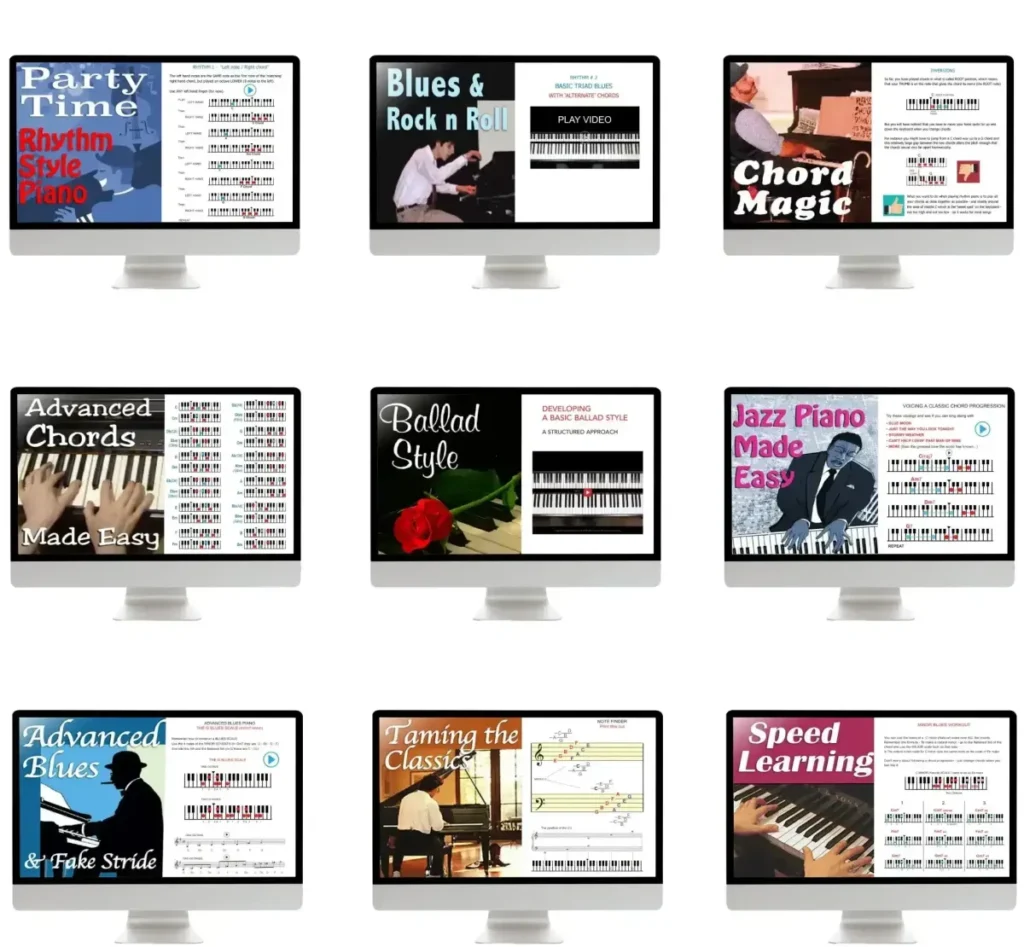
Pianoforall is a bundled course — ebooks, video lessons, and audio material — built around a simple premise: get you playing real songs by ear and by chords before you worry about reading notation. It covers a wide range of styles (jazz, blues, rock ‘n’ roll, ballads, pop, classical, and ragtime, per the vendor), and it’s designed to be worked through at your own pace, in whatever order makes sense to you. There’s no app listening to what you play and no built-in schedule — it’s closer to a structured textbook-and-video course than an interactive tool.
How Simply Piano teaches
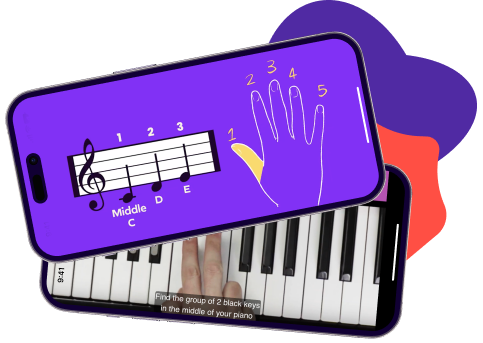
Simply Piano takes the opposite approach: you prop your device up near your piano or keyboard, and the app listens through the microphone (or a MIDI connection, for more accuracy) while you play, checking your notes in real time. Its curriculum is described as “step-by-step tutorials perfectly paced for beginners,” combining warm-ups, personalized exercises, and sheet music, alongside a song library the app describes as spanning classical pieces to current hits. The app itself sequences what you work on next, rather than leaving that entirely up to you.
Which gives better feedback?
This isn’t close, structurally: Simply Piano gives real-time feedback and Pianoforall doesn’t. If a big part of what you want out of a piano tool is knowing immediately whether you played the right note, Simply Piano is built for that in a way Pianoforall simply isn’t attempting to be. That said, Simply Piano’s microphone-based recognition isn’t flawless: it can occasionally misjudge which octave you played or drop notes when you play chords with both hands, which is part of why Simply Piano’s own help center recommends a MIDI connection for more advanced material. Pianoforall’s lack of feedback is a known trade-off of its format, not a flaw exactly — it simply isn’t designed to listen to you at all.
Which is better for learning to read music?
Neither product makes formal sight-reading its central focus, and it would be an oversimplification to say one teaches notation and the other doesn’t. Simply Piano’s curriculum includes sight-reading content alongside its song-based lessons, though the app’s own marketing doesn’t detail how deep that instruction goes. Pianoforall touches on notation as well, but multiple reviewers who cover the course describe it as light on sight-reading fundamentals relative to its chord/ear focus. If reading traditional notation fluently is your primary goal, neither tool should be assumed to get you there on its own — that’s worth factoring in before choosing either.
Which is better for chords and playing by ear?
Here the emphasis clearly favors Pianoforall — chord- and ear-based playing is the organizing idea behind the entire course, not a section within it. Simply Piano isn’t positioned around chords and ear training in the same way; its own marketing frames the experience around “songs you love” and structured technique rather than an ear-training philosophy specifically. That doesn’t mean Simply Piano can’t help you develop an ear for playing — just that it isn’t the app’s stated focus the way it is Pianoforall’s.
Which requires more self-discipline?
Pianoforall asks more of you here. With no app tracking your progress, no notifications, and no one checking your notes, staying consistent is entirely on you. Simply Piano’s structure — a sequenced curriculum plus immediate feedback on every attempt — does more of that motivational work for you, which is a real advantage for learners who know they struggle to stick with self-directed material.
Pricing and long-term cost
The pricing models are fundamentally different, not just different numbers. Pianoforall is a one-time purchase — $49 as of August 30, 2026, backed by a 60-day money-back guarantee — with no recurring charge afterward. Simply Piano is a recurring subscription, with individual and family tiers; we found meaningfully conflicting pricing figures across the app’s own store listing and multiple secondary sources during research, which is common for subscription apps that run regional and promotional pricing. Rather than print a number that may not match what you’re offered, subscription pricing varies by plan and region — confirm the current price in the app or through Simply Piano’s official purchase flow before committing. Structurally, a one-time purchase has a lower ceiling on total cost if you stop using it quickly; a subscription costs more the longer you keep it, but also keeps delivering new content and support for as long as you’re paying.
Device and practice experience
Pianoforall works across PC, Mac, iPad, and Android, both online and offline per the vendor, which suits reading on a laptop or tablet propped next to your piano. Simply Piano is built specifically as a mobile/tablet app experience — iOS, Android, and Chromebook, with newer support for Apple Vision Pro and Android XR — designed to sit right on or near your instrument so its microphone can hear you play. If you’d rather read/watch lessons on a bigger screen away from the piano and practice separately, Pianoforall’s format fits that better. If you want your device to actively participate while you’re playing, Simply Piano’s in-the-moment design is the point.
Which is better for complete beginners?
It depends on what kind of beginner you are. If you’re someone who needs a nudge and immediate confirmation that you’re doing something right, Simply Piano’s real-time correction removes a lot of the guesswork that trips up brand-new players. If you’re self-motivated, want to start playing real songs by ear quickly, and would rather not commit to a monthly cost while you figure out if piano is for you, Pianoforall’s lower financial commitment and song-first approach can be the more comfortable entry point. Neither is inherently “easier” — they just ask different things of a beginner.
Who should choose Pianoforall?
Beginners who want to pay once, don’t mind learning without real-time correction, and are motivated by playing recognizable songs by ear across genres like blues, pop, or classical rather than working through formal notation drills.
Who should choose Simply Piano?
Beginners who want a guided, app-driven experience that tells them immediately whether they’re playing the right notes, and who are comfortable with an ongoing subscription in exchange for that structure and accountability.
Explore PianoforallVerdict
Pianoforall makes more sense for a self-directed learner who wants a fixed one-time cost and is drawn to chords and ear-based playing over formal correction. Simply Piano makes more sense for a learner who wants built-in feedback and structure and doesn’t mind paying for it on an ongoing basis. If you’re still unsure which style of learning fits you before comparing specific products, our guide on how to choose an online piano course as a beginner walks through that decision in more depth. And if you want the fuller picture on Pianoforall specifically, see our Pianoforall review.
Weighing more than just these two apps? See our full roundup of piano learning apps for how Simply Piano compares to Flowkey, Skoove, Piano Marvel, and others.
Sources & References
- Pianoforall official order page (pianoforall.com/order) — pricing, guarantee, checkout status, checked August 30, 2026
- Simply Piano official site (hellosimply.com/simply-piano) — features, curriculum, platform support
- Simply Piano official Help Center (piano-help.hellosimply.com) — note recognition and MIDI guidance
- Trustvize’s own Pianoforall research (see the Pianoforall review for the full source list on that product)